When Broken Relationships Come Home to Roost: Thoughts on Christopher Nolan’s 𝘛𝘩𝘦 𝘖𝘥𝘺𝘴𝘴𝘦𝘺
September 01, 2026
“Hear this, you who trample on the needy, and bring to ruin the poor of the land.”
—Amos 8:4, NRSV
In Chattanooga, my teenage sons and I recently watched Christopher Nolan’s epic, The Odyssey. The film was screened at the IMAX theaters at the Tennessee Aquarium and like everyone else, our anticipation was high. The Aquarium had pulled its retired IMAX 70mm Grand Theatre film projector out of storage and reinstalled it after 10 years of disuse. As we took our seats amid the sounds of crunching popcorn, we were excited to experience the sheer magnitude of the spectacle. We were not disappointed. However, I was surprised to find a deep resonance with one of Nolan’s primary themes: how systems can shape us, both in our relationships with one another and how we treat those in poverty.
A major theme of The Odyssey is the breakdown in hospitality, or xenia, as Homer called it: the obligation to provide food and shelter to the guest and the traveler. Xenia was not simply a polite recommendation, but a moral and political imperative. This breakdown of hospitality is most clearly shown by the reckless suitors who have gathered in Ithaca awaiting the decision of Odysseus’s wife, Penelope, to take a new husband and king. The suitors flout the law of hospitality owed to Odysseus’s own house, emptying the wine cellars and the food stores as they compete to become the new king of Ithaca.
As I drove home from the theater, laughing and joking with my boys, my mind drifted back to the film. I couldn’t escape the feeling that Nolan was exploring themes that echoed the Old Testament prophets: what happens when the breakdown of civility, and of relationships, comes home to roost?
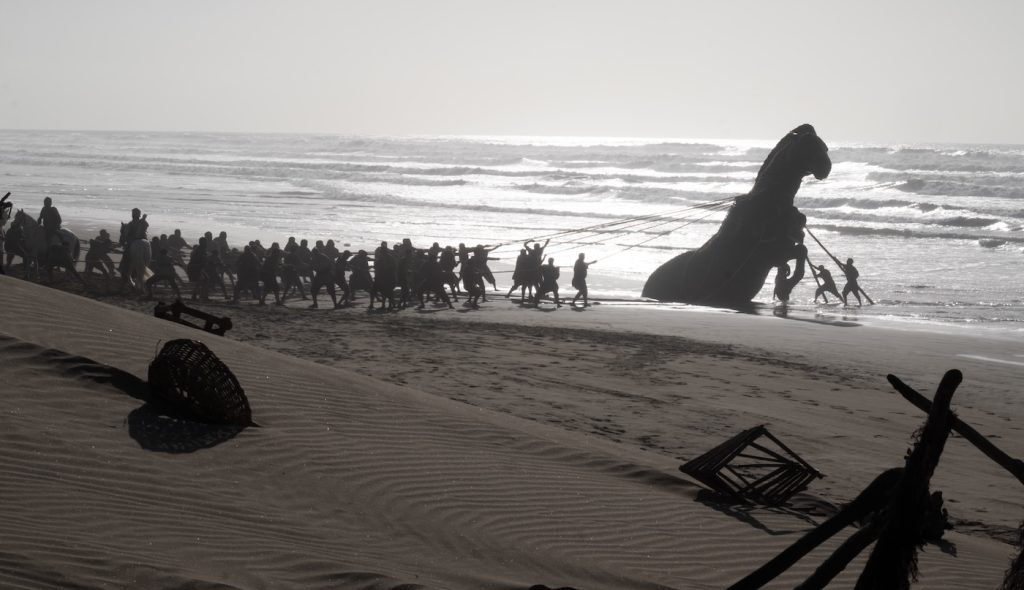
In Nolan’s retelling, the reckless suitors are only a late manifestation of a more general breakdown. The breakdown in hospitality begins far earlier in the Iliad, with Agamemnon and the Trojan Horse. The Trojan horse was built with the appearance of a gift, a traditional peace offering from the Greeks to the Trojans. As many will remember, inside the wooden horse hid Odysseus and his men waiting to gain entry into the impenetrable walls of the city of Troy. As Odysseus and his men hide in the cramped wooden horse, they have not only devised a clever trick; they have also betrayed a deeply-held cultural norm. And waiting in the shadows is the Greek general and supreme commander, Agamemnon.
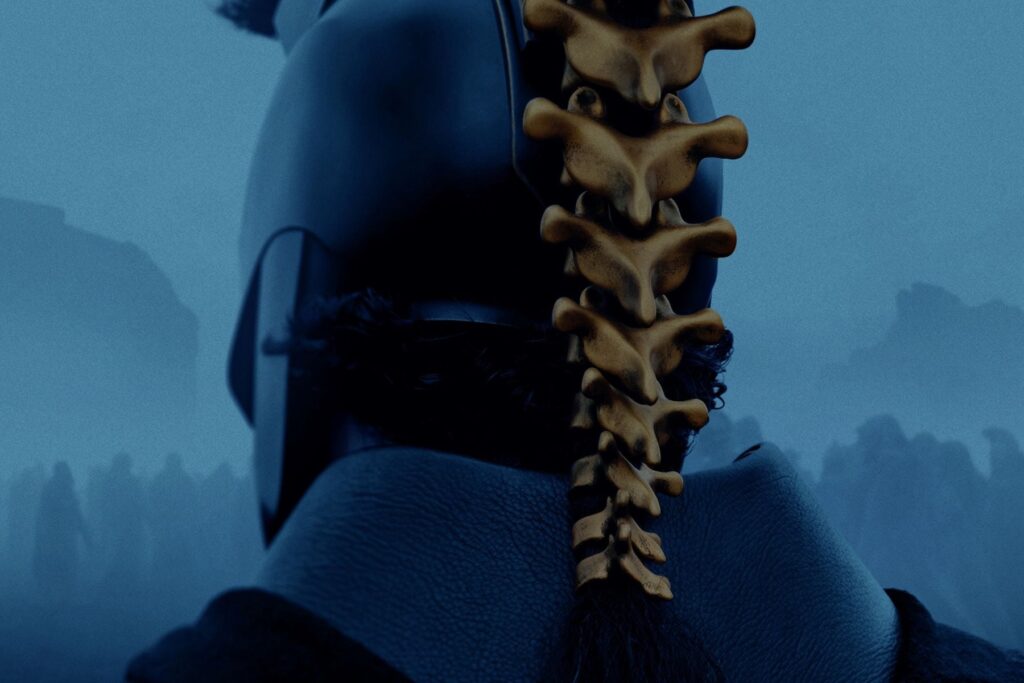
Agamemnon embodies the dark, impersonal logic of conquest: victory must be achieved, regardless of the human cost—even when it meant sacrificing his own daughter, Iphigenia to appease the goddess Artemis, who had prevented the Greek fleet from sailing to Troy. Notably, we never see Agamemnon’s face; the horsehair crest of his helmet is replaced with a cold metallic spine. Agamemnon is not merely an imposing figure, but a malign symbol of what happens when systems confuse means for ends, reduce people to objects, and distort the relationships that bind us to one another. If Agamemnon symbolizes the broken system, Odysseus represents the ingenious manager who translates Agamemnon’s logic of victory into effective means. His intelligence does not protect him from Agamemnon’s corruption, but rather makes him capable of carrying the general’s purposes forward.
Further revealing the depth of fractured civility Odysseus disguises himself as a beggar to pass unnoticed in his kingdom on his voyage home. As expected, he is disregarded in the great hall. Several suitors abuse him violently. The distortions that began with Agamemnon and the Trojan horse have now come home to roost.
Shifting our gaze to the present, at the heart of many of our problems is the brokenness of our relationships with God, ourselves, others, and creation. Crucially, the brokenness of creation is more than environmental stewardship. Rather, creation has a much broader dimension, including relationships to our work, and the practices and systems that shape us.
For Nolan, powerful systems lurk in the shadows. Agamemnon, whose face is never seen, is an imposing force who commands and influences from a distance. For many of us, aren’t systems like that? Like water for a fish, systems are something we can swim in without consciously thinking about them and how they form us—particularly when those systems generally work well for us. But for many, the same systems negatively impact their everyday lives, resulting in frustration, exhaustion, and mistrust. And importantly, even if we are unaware of them, broken systems have the power to conform us into beings that are different from what God intended.
Broken systems do not eliminate human agency; we are all responsible for our own actions. Yet they remind us that none of us acts in isolation. We are powerfully formed by the communities, families, practices, and institutions that shape us. Holding personal responsibility within this broader context deepens our humility and empathy—for ourselves and our neighbors.
Later that evening after the boys had gone to bed, I began to ask myself:
Like Odysseus, when might I have become an unwitting transmitter of systems that contradict the good I profess to seek?1 Am I sufficiently attentive to the principalities and powers that enlist my intelligence, ambition, and good intentions into practices that diminish my neighbors or erode my relationships?2 Like the suitors, am I guilty of dehumanizing the sojourner, the orphan, and the widow in my midst?3
The mirror of Odysseus might be hard to see ourselves in. This mirror asks us to expand our moral imagination to see the systems we inhabit every day—and our own place within them. It calls us to live according to an upside-down kingdom that ensures the best seats are saved for the poor.4 And it requires deep humility to ask not only what is wrong with the system, but how the system has formed us.
As Odysseus clears the house of the suitors and sails from Ithaca, he laments the loss of civilization and believes that one day others will recount his story as a reminder of what had happened to the Greeks, of what had been lost. As Christians, our story runs much deeper: it’s not merely about civility, but how we choose, each day, to live out God’s redemptive story inside broken systems —to act justly and to love mercy and to walk humbly with your God5—and, in doing so, to demonstrate the love of Jesus toward those around us, particularly among the poor.
Civilizations do not lose their humanity only through war or catastrophe. They also lose it when gifts become weapons, guests become threats, the poor become burdens, and ingenuity becomes detached from the good. Nolan believes that the past can still speak to us. As Christians, the Old Testament prophets suggest that we had better listen.
- Amos 5:21-24
- Ephesians 6:12
- Deuteronomy 10:18
- James 2:1-7
- Micah 6:8

Leave a Reply