Adapted from A Field Guide to Becoming Whole: Principles for Poverty Alleviation Ministries, pp. 46-49.
The church is absolutely central to God’s work of restoration in the world and to our work of addressing material poverty. It reminds us what story we’re living in, who God has created us to be, and—in ways that are as incredible as they are mysterious—connects us to the life and power of the Trinity.
And that last piece, the relational unity between us as God’s people and Father, Son, & Holy Spirit, is especially critical to how we design our ministries because we were never meant to be alone!
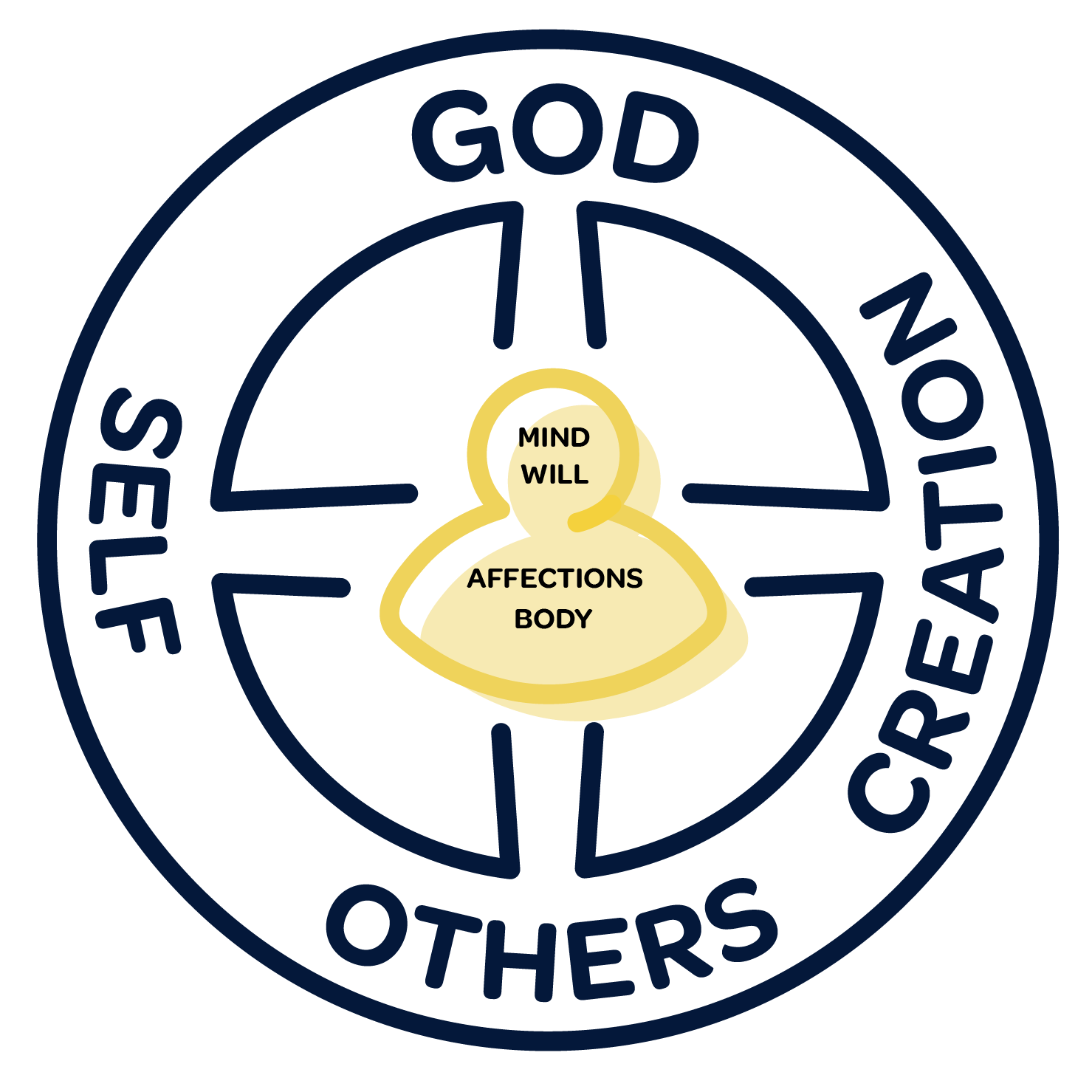
Human beings are deeply wired for community—the “relationship with others” spoke in our “wheel” diagram of God’s design for human beings. In fact, community precedes work: God existed in perfect community as Father, Son, and Spirit before He acted in creating the world, and He has made human beings to bear His image in the this same way.1
God’s work is done in community, and so our work is also to be done in community. “The Lord God said, ‘It is not good for the man to be alone. I will make a helper suitable for him’” (Gen. 2:18). This is not just about marriage, but about something fundamental to human-ness. Note also in this verse that community is not just for the weekend—as if going to church was all God had in mind for how we are gathered together. Adam and Eve were colaborers. The two of them worked, in community, to fulfill their calling as priest-rulers. We need community not just on Sunday, but Monday through Saturday as wel!
Although this is true for all people, it is particularly true for people in material poverty, who often experience the following:
- Geographic, social, and economic isolation
- Lack of support and encouragement
- Feelings of shame and loneliness
- Messages that they are inferior and worthless
In this light, we encourage everyone working in poverty alleviation, relief, development, or advocacy ministry to try to use supportive and encouraging groups as much as possible in the design of your ministry.
For example, in the interests of efficiency, many microfinance programs are moving away from methodologies that require groups of people to meet together, sometimes even collecting savings and administering loans to individuals via cell phones, thereby removing the need for any human interaction. While this approach cuts down on time and costs, it also loses the tremendous power of the group, so the Chalmers Center and our partners continue to use and promote a group-based approach in our savings and microfinance ministries.
Yes, cell phones would be more efficient—and there is sometimes a role for them—but “God sets the lonely in families” (Ps. 68:6). Indeed, commenting on a microfinance ministry, a community health worker told us, “Most of these people have been ostracized by their families and have come from all over the country to this slum. The fact that people from different tribes have come together2 and formed a new ‘family’ is an amazing thing.”
Groups that are supportive and encouraging act like a greenhouse, a habitat that shields people from the harsh external environment and provides them with a context in which they can heal and flourish. As complex, malleable mind-affections-will-body-relational creatures human beings can be damaged by external forces, just as wheels can be damaged by potholes. Oppressive systems and harmful narratives can do lasting damage to every aspect of our mind-affections-will-body-relational creature.
For many people in poverty, the explicit or implicit messages of the culture communicate: “You’ll never amount to anything;” “People from your ethnic group are good-for-nothings;” or “Women aren’t as good as men.” In such cases, there is tremendous healing power in being part of a group that is singing a different tune, the tune of the gospel of the kingdom: “God loves you, and so do we; you are of infinite value and have something to contribute; you are part of our family, so welcome home!”
In addition, groups can provide the loving accountability that we all need. Ongoing change is central to becoming whole, and change is always hard. We all need people who can speak into our lives, lovingly correcting us when we are wrong and spurring us on to love and good deeds (Heb. 10:24; James 5:20).
Finally, if any members of the group are not experiencing material poverty, they can often make the systems work better for those who are. People in poverty typically lack access to valuable social networks that we take for granted, so we can help by connecting them to our friends: business owners, landlords, and bankers who can assist with jobs, housing, and loans.
Moreover, as we walk together over time, we will discover systems that are broken or unjust, creating opportunities for us to use our influence to advocate for much-needed change to the brokenness of the world. And in the process, we will start to see how life looks through the eyes of those in poverty, making us more empathetic people—making us more whole.
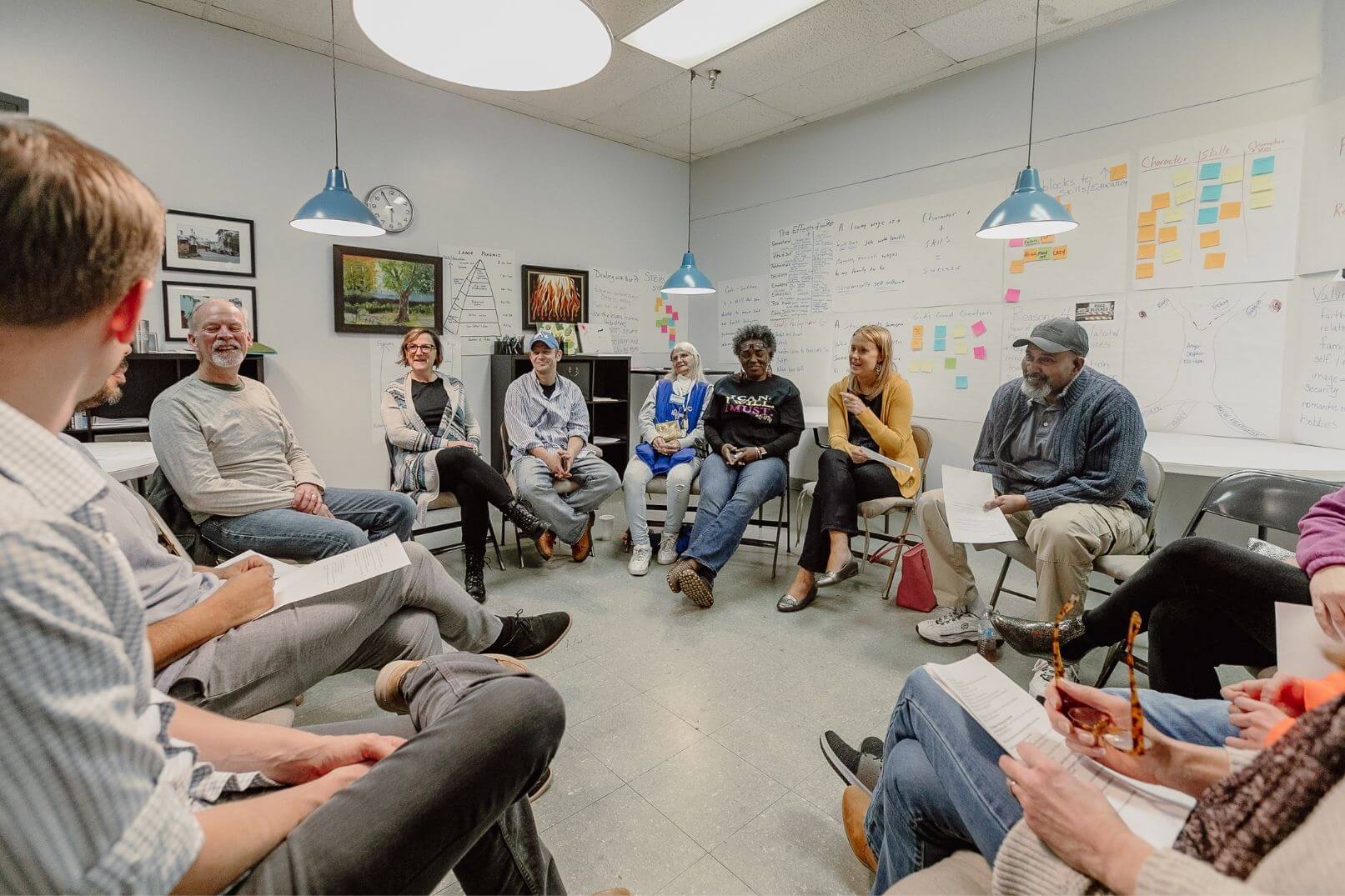
In fact, supportive groups can be so powerful that—in addition to being a component of a ministry—they can actually be the ministry. This is how we design our programs around financial literacy and jobs preparedness training for use in the U.S. The training depends on teams of allies (who are typically materially better-off) engaging in the program fully alongside those in poverty. As program participants grow in trust, they are increasingly able to articulate goals and what they will do to achieve those goals, and then the allies offer encouragement, support, accountability, and help with accessing social networks and navigating systems.
Together, through the class, everyone grows more into the likeness of Christ, because we are made for one another. How could we design our ministries any other way?
1 See Brian Fikkert and Kelly M. Kapic, Becoming Whole: Why the Opposite of Poverty Isn’t the American Dream (Chicago, IL: Moody Publishers, 2019), chapter 6.
2 Interview with Brian Fikkert, 2006.

Leave a Reply